
To find the right villa rental Île de Ré for your trip, start by locking four things in place: the village (and micro-location), the season, your non-negotiable comfort criteria, and the total budget (not just the nightly rate). Once those are clear, comparing listings becomes a practical checklist exercise rather than a stressful guess.
Direct answer: Choose your Île de Ré villa by (1) picking the village zone that matches your daily routine (beach time, cycling, restaurants, quiet), (2) shortlisting only listings that clearly state capacity and essentials, (3) pressure-testing quality with photos, recent reviews, and written terms, and (4) booking earlier for high season because availability tightens fast.
Your 5-step pre-booking plan for Île de Ré villas
- Define your trip basics first: people, dates, max total budget, must-have features.
- Pick a village zone (south/center/north) based on atmosphere and daily logistics.
- Filter listings for clarity: detailed amenities, distances, house rules, and fees.
- Validate trust: recent reviews, professional communication, written terms before paying.
- Re-check totals and cancellation rules, then book fast if it’s peak summer.
What Makes a Villa Rental on Île de Ré the Right Fit?
A villa is the “right fit” when it matches your group size, your day-to-day plan on the island, and your comfort baseline—without forcing you into trade-offs you’ll regret once you arrive. The easiest way to get there is to decide your priorities before you fall in love with photos.
What should you define before you even start browsing?
Decide three non-negotiables first: capacity (how many sleep comfortably), season and dates (fixed or flexible), and maximum total budget (including fees, deposits, and options like linens). This prevents the classic mistake: comparing a “perfect” house in July with a realistic budget that only works in shoulder season.
Then add two “nice-to-haves” you can compromise on (for example: private pool, sea view, extra bedroom, large garden). This keeps your search wide enough to find availability when listings move quickly.
Villa, holiday house, or apartment: what’s the practical difference?
On listings, the terms can be used loosely, so focus on what changes your stay. A “villa” usually implies a standalone house with outdoor space; a holiday house can be similar but may be more compact; an apartment often means easier parking/maintenance but less private outdoor living. Your decision lever is simple: if your holiday plan includes outdoor meals, kids’ play time, or quiet evenings at home, prioritize a house with a usable exterior (terrace, garden, courtyard) over a slightly better interior design.
Which comfort criteria matter most on Île de Ré?
Translate comfort into checks you can confirm in the listing. For many travellers, the big ones are: outdoor space, shade (terrace awning or trees), secure bike storage, and walkability to either the beach or village center—depending on your routine.
- Exterior: terrace size, barbecue rules, fencing if travelling with young kids (verify details rather than assuming).
- Layout: number of bathrooms vs. bedrooms, noise separation for kids/early sleepers.
- Mobility: bike access, parking clarity, and whether you’ll rely on shops/restaurants within walking distance.
Cas pratique
A hypothetical example: a family of 5 may rank “enclosed garden + 2 bathrooms + bike storage” above “close to nightlife,” while a couple might accept a smaller place if it’s walkable to restaurants and a harbour. Same island, same dates—two different definitions of “right villa,” so the shortlisting rules must change.
Choosing the Right Village and Location
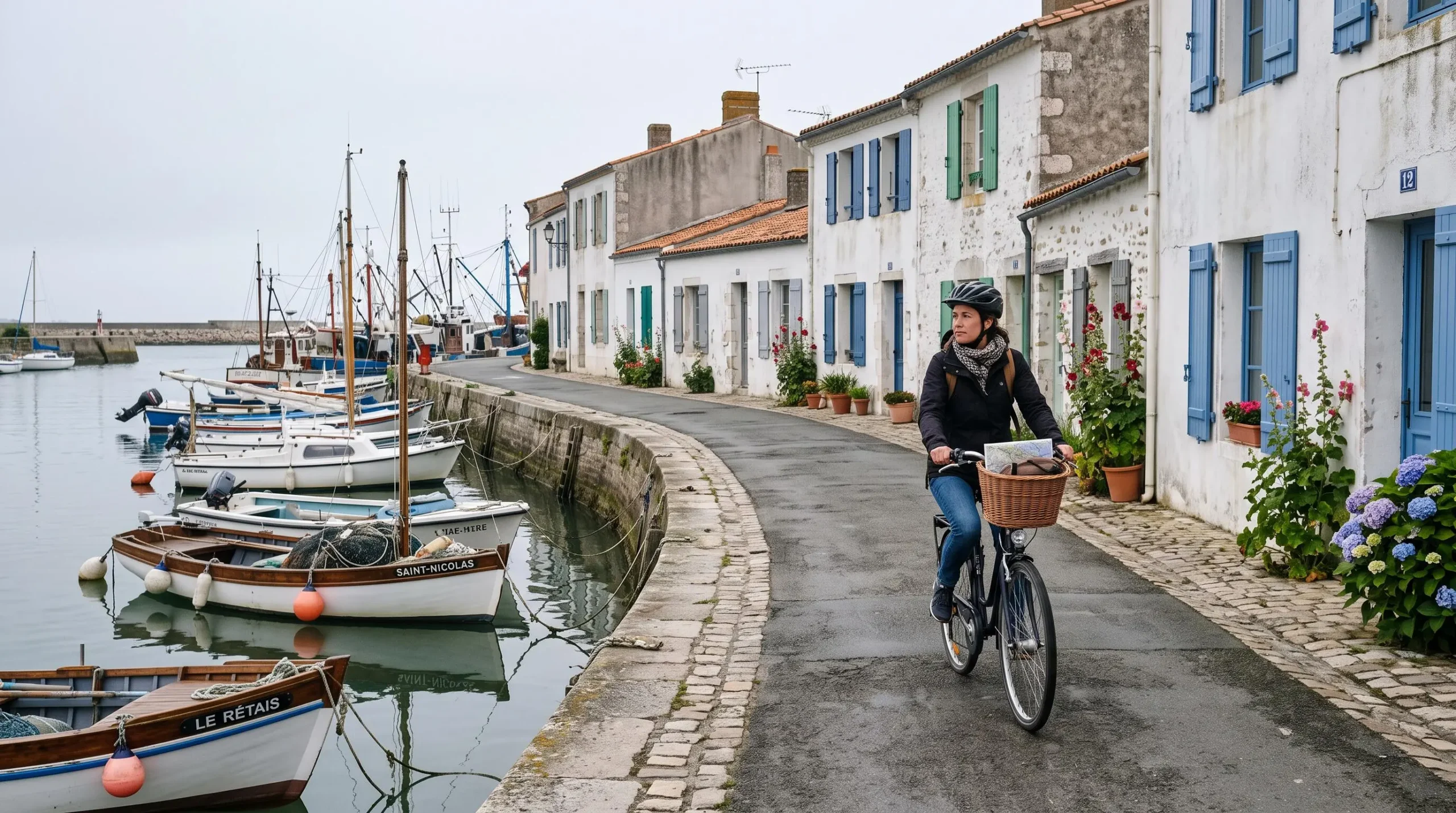
The best village to stay on Île de Ré depends on your daily rhythm: do you want harbour life and restaurants nearby, long beach days, or quieter nature-focused surroundings? A practical way to choose is to start with the island’s broad zones—south, center, and north—then narrow down to a walkable micro-area you can picture yourself using every day.
The official tourist board groups the island’s ten villages into three zones (south, center, north), each with a distinct atmosphere—from seaside walks to salt-marsh nature escapes (Île de Ré villages by zone).
North vs south: what changes for a villa holiday?
Think in trade-offs you’ll actually feel. The south (closest after crossing the bridge) can make arrivals and short stays easier; the north tends to suit travellers who prioritise quieter surroundings and nature-led days. The center often balances beach access with village life.
Turn that into a decision you can act on: if you’re planning lots of back-and-forth (markets, restaurants, meeting friends), pick a village where you can do most errands by bike or on foot. If you want calmer evenings and more time “at the house,” you can accept being further from the busiest streets—provided the villa location still works for beach access or cycling routes.
How do popular villages compare when you read listings?
Instead of chasing a “best village,” compare what you get for the same budget: centrality, beach proximity, and the likely level of animation nearby. As a simple comparison, a more animated harbour village such as Saint-Martin-de-Ré can suit travellers who want restaurants and evening walks, while a quieter village such as Les Portes-en-Ré may suit travellers looking for a calm base and nature-oriented days. The key is not the name—it’s whether the listing’s location supports your plan.
To make comparisons easier, use one stable rule across all listings: measure location in “daily friction.” Will you be happy cycling to the bakery every morning? Will parking be a stress point? Are you okay with a longer ride to the beach if the house is quieter?
| Criterion you can verify | More “village life” location | More “quiet retreat” location |
|---|---|---|
| Evening atmosphere | More restaurants and foot traffic nearby | Quieter streets, fewer nearby spots |
| Errands without a car | Easier walk/cycle access to shops | May require longer rides or planning |
| Beach routine | Often closer to organised beach access | May trade proximity for calm and space |
| Noise risk | Higher near busy streets/ports in peak weeks | Lower if set back from main areas |
How do I know if a villa on Île de Ré is well located?
Use a three-question filter you can apply to any listing: What will I do every day? (beach, market, cycling, dining), how will I get there? (bike, walking, car), and what would annoy me after day two? (noise, lack of shade, too far from shops).
Ask the host/agency to confirm location facts in writing (for example: nearest village center, nearest beach access, and parking situation). This isn’t about distrust—it’s about matching expectations, especially when photos make distances feel shorter than they are.
How to Check Quality and Avoid Booking Mistakes
You can’t fully judge a property online, but you can reduce risk sharply by checking for listing clarity, review consistency, and written terms before paying anything. The goal is simple: eliminate surprises that cost you comfort, time, or money once you arrive.
What are the red flags in a seasonal rental listing?
Red flags are usually not a single issue, but a pattern of missing specifics. Be cautious when a listing has few photos, blurry images, or a description that stays vague about essentials (sleeping layout, bathrooms, exterior, fees, and rules). If you can’t tell how the villa works for real life, you can’t compare it fairly.
- Photos that avoid key areas (bathrooms, kitchen, exterior seating).
- No clear capacity details (beds vs. “sleeps X”).
- Unclear extras: linens, cleaning, heating, parking, or deposits.

How should you read reviews without over-trusting them?
Prioritise recent reviews and look for repeated, concrete comments (cleanliness, noise, accuracy of photos, responsiveness). One enthusiastic review is less useful than five reviews that describe the same reality in different words.
Also check whether the feedback matches your profile: a couple praising “quiet mornings” doesn’t guarantee that a family will find the layout practical. Your action step: make a short list of “deal-breakers” (noise, stairs, bedding comfort, lack of shade) and scan reviews for those topics first.
What should you verify in the terms before paying a deposit?
Before any payment, get the key terms clearly stated: total price, what’s included, deposit/security deposit amount and conditions, cancellation rules, check-in/check-out times, and whether linens/cleaning are included or optional. If anything is unclear, ask for clarification in writing and keep it with your booking documents.
High-season cancellation risk: In peak weeks, strict cancellation policies can turn a timing mistake into a costly one—read the terms line by line before committing.
What basic legal/regulatory points can you sanity-check in France?
When you rent a furnished holiday property in France (“meublé de tourisme”), there are baseline rules that apply to owners, such as town-hall declaration requirements in many cases. The Direction générale des entreprises explains that declaring a furnished tourist rental to the town hall is mandatory unless the property is the owner’s primary residence, under the Code du tourisme framework (French furnished rental declaration rules).
This doesn’t “certify” a specific listing by itself, but it gives you a concrete question to ask a professional host or agency if something feels unclear: is the rental operated within the local framework for furnished tourist lets?
Booking Windows, Seasons and Budget Planning
On Île de Ré, the biggest driver of availability pressure is seasonality. Your most reliable strategy is not hunting for a “magic deal,” but matching your expectations to the season you’re travelling—and deciding early how flexible you can be on dates and village.
How does seasonality change what’s “realistic”?
Expect more competition and fewer comparable alternatives in high season (July–August), with more flexibility (and sometimes shorter minimum stays) outside those peak weeks. Without verified local figures in the sources provided, it’s safer to avoid quoting a specific number of months to book ahead. What you can rely on is the direction: peak summer weeks are the hardest to secure, so you’ll want to shortlist and decide faster once you find a match.
One useful context point: INSEE reports strong summer demand in Charente-Maritime, with a 62% occupancy rate for furnished rentals in summer 2023 (“meublés”), up two points from 2022 (Charente-Maritime summer occupancy rate). This is department-level data (not Île de Ré only), but it supports the practical idea that summer availability can tighten quickly.
When should I book a villa for summer?
If you’re travelling in July or August, treat “finding the right listing” and “being ready to book” as two separate tasks. Do the verification work (questions, terms, review scan) before you’re emotionally attached—so when a good option appears, you can move without rushing blindly.
- Pre-filter in 20 minutes
Remove anything unclear on capacity, outdoor space, or total costs. If the listing doesn’t let you verify basics, don’t spend time on it.
- Shortlist 3 comparable villas
Same dates, similar capacity, same zone (south/center/north). Comparisons only work when alternatives are truly comparable.
- Ask 5 written questions
Distances you care about, what’s included (linens/cleaning), deposit rules, cancellation terms, and arrival process.
- Decide with your non-negotiables
If the villa meets your must-haves and the terms are clear, book—waiting “to see if prices drop” can simply remove your option.
How can I avoid overpaying without gambling on timing?
Your two safest levers are flexibility and comparability. Flexibility means shifting by a few days, considering shoulder-season weeks, or widening your search from one village to the neighbouring zone. Comparability means you only judge price after you standardise what you’re comparing: same capacity, similar location friction, similar outdoor space, and the same inclusions (linens/cleaning/fees).
Action step: create one “reference villa” you like, then compare every other listing against it using the same checklist. That stops you from paying extra for features you don’t actually use.
Final Checklist Before You Reserve Your Villa
Right before you commit, run a final check that forces clarity on the two things people regret most: location reality and total cost. Your goal is not perfection—it’s a booking you can feel confident about once you arrive.
What should you verify one last time before confirming?
- Location fit: village zone + micro-area matches your routine (beach, shops, quiet).
- Capacity reality: beds and bathrooms match your group (not just “sleeps X”).
- Outdoor usability: seating, shade, privacy, and any rules that affect your plan.
- Total price: all fees and options included, plus deposit/security deposit conditions.
- Terms: cancellation policy, check-in/out, and what you must bring (linens, towels).
- Written confirmation: keep the contract/confirmation and key messages before paying.

Which resources should you keep handy while you decide?
If you want to cross-check your village choice and get a clearer sense of the island’s zones and atmosphere, the official “Destination Île de Ré” site is a reliable reference point for understanding the villages (south/center/north) and what each zone tends to feel like. For family-specific priorities (layout, outdoor safety, daily logistics), you can also use this internal resource on family rental tips.
If you’re hesitating between two villas, don’t wait for a “perfect” option—decide based on your non-negotiables, the clearness of the terms, and how well the location supports your daily plan. That’s what makes a villa rental on Île de Ré feel like a holiday on day one, not a compromise you manage all week.